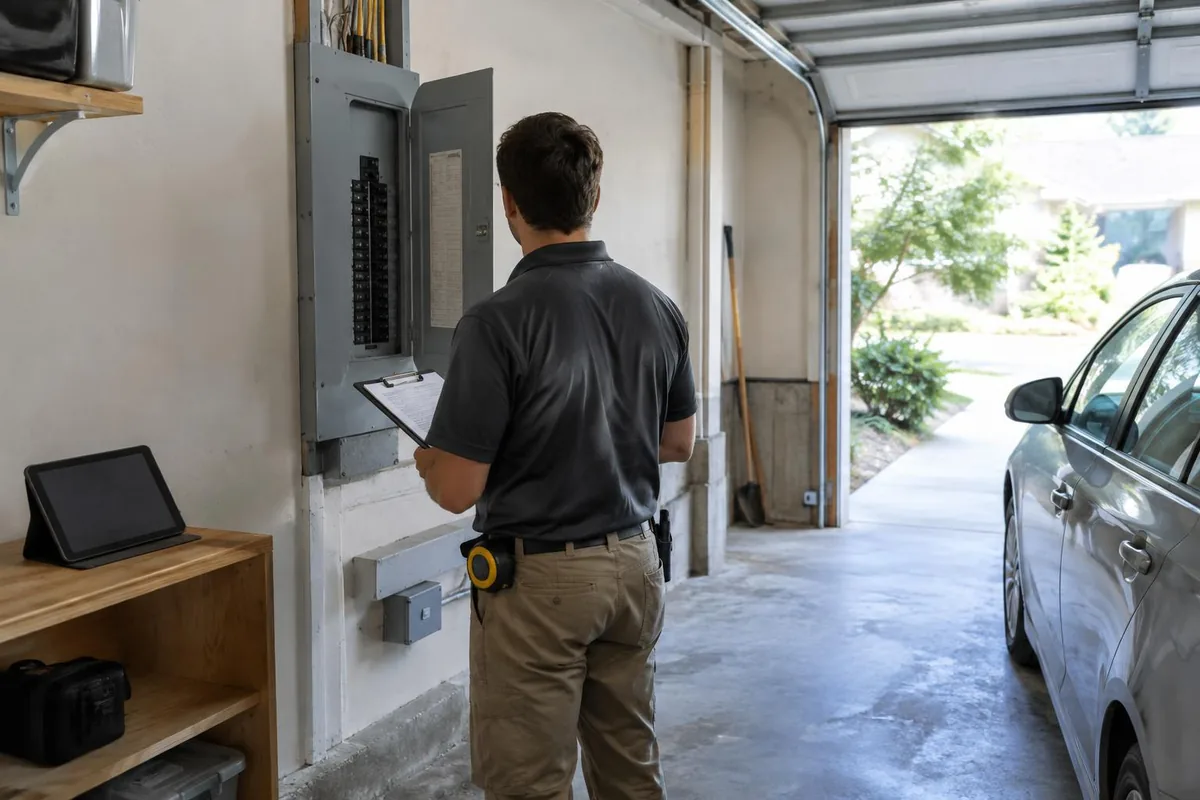
EV Charger Installers of Asheville does home EV charger installation in Asheville, NC for owners who want a full battery waiting every morning. Our electricians install hardwired Level 2 units, NEMA 14-50 outlets and Tesla Wall Connectors at single-family homes and townhomes around the French Broad valley and the hills above it. We match each circuit to the car's onboard charger and to the panel behind it. Your car might park in the garage, under a carport or at the end of a steep mountain driveway.
Every installer here holds a North Carolina electrical license, and home charger circuits have been steady work for us over many years. We calculate the load before a new panel is ever mentioned. Invoices for Duke Energy Progress customers are set up for the Charger Prep Credit, and no work begins until you hold a free estimate.
Get a FREE EV Charger Installation Quote
What We Install: EV Charger Installation Across Asheville Homes
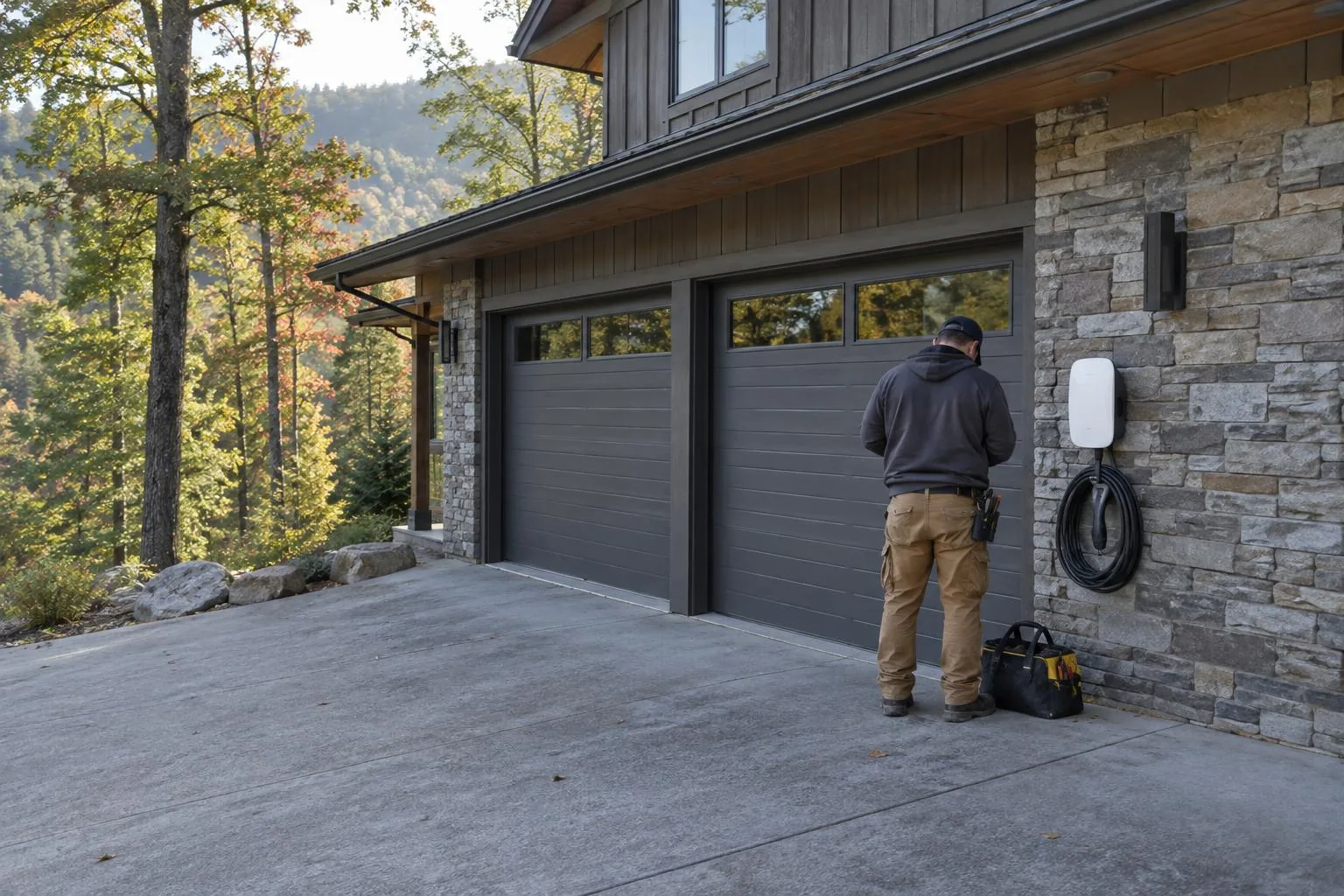
Tesla's Wall Connector tops out at 48 amps and about 11.5 kW, and it needs a 60-amp breaker dedicated to it. Our crew runs that line from the panel to wherever your charge port ends up, hangs the unit indoors or out and connects it to Wi-Fi. After that, schedules and updates come through the Tesla app on your phone.
If a Hyundai, Kia or Ford shares the garage, the Universal Wall Connector adds a built-in J1772 adapter next to the Tesla plug. Households with two Teslas can connect several Gen 3 units to one panel with power sharing, and the system keeps total draw inside safe limits.
Houses less than 20 years old tend to have 200-amp panels and capacity to spare. Older houses still on 100-amp service are the ones that may need work. A load calculation during the free visit answers it, before replacing any equipment comes up.
If the numbers fall short, we compare three routes: load management, a subpanel or a full service upgrade. We pick the smallest fix that holds up and list every option on paper. Duke's Charger Prep Credit counts panel upgrades and the breaker among its covered costs. The invoice that closes the job also supports your claim if you are a Duke Energy Progress customer.
Level 2 Chargers, Any Brand
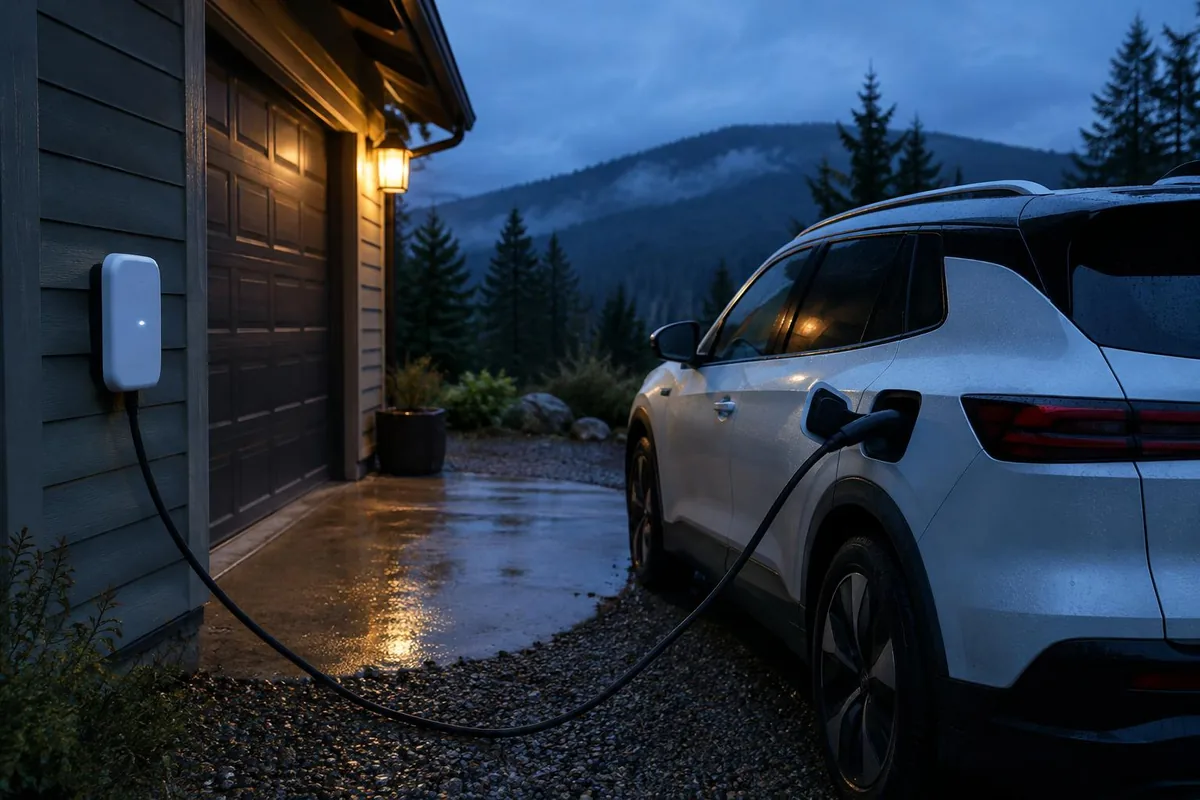
Level 2 charging restores range many times faster than a household outlet does. We install ChargePoint, Emporia, Wallbox, JuiceBox and automaker units, wired direct or set on a plug, for any EV or plug-in hybrid.
Buy the charger only after we have seen the panel. A unit rated above what the car accepts wastes money, and one rated below what the panel can spare leaves speed unused. We read both limits at the estimate and hand you a short list of units that fit, so you shop with facts.
NEMA 14-50 Outlet Installs
A NEMA 14-50 outlet is a 240-volt socket reserved for the mobile connector that came with the car, or for a portable Level 2 unit. It gets a breaker of its own and is never shared with a dryer.
Plug-in setups top out below hardwired ones, and Duke requires any charger above 40 amps to be hardwired. A 48-amp Wall Connector therefore always connects straight to its circuit. Owners who want to take the cord with them, or who share a garage space, tend to choose the outlet. The box goes wherever the cord can reach the car without crossing your path.
Load Management, No New Panel
A load management device tracks what the whole house is pulling and eases the charger down whenever the oven, heat pump and dryer all kick in at once. In a house close to its limit, that single device often replaces a panel upgrade.
Asheville houses with electric heat, a well pump or a workshop on the same panel are the usual candidates. Two cars can share one managed circuit, with the rate divided between them. The device costs far less than new service, and we quote it first whenever the load calculation says it will hold.
Garage, Carport and Wall Mounts
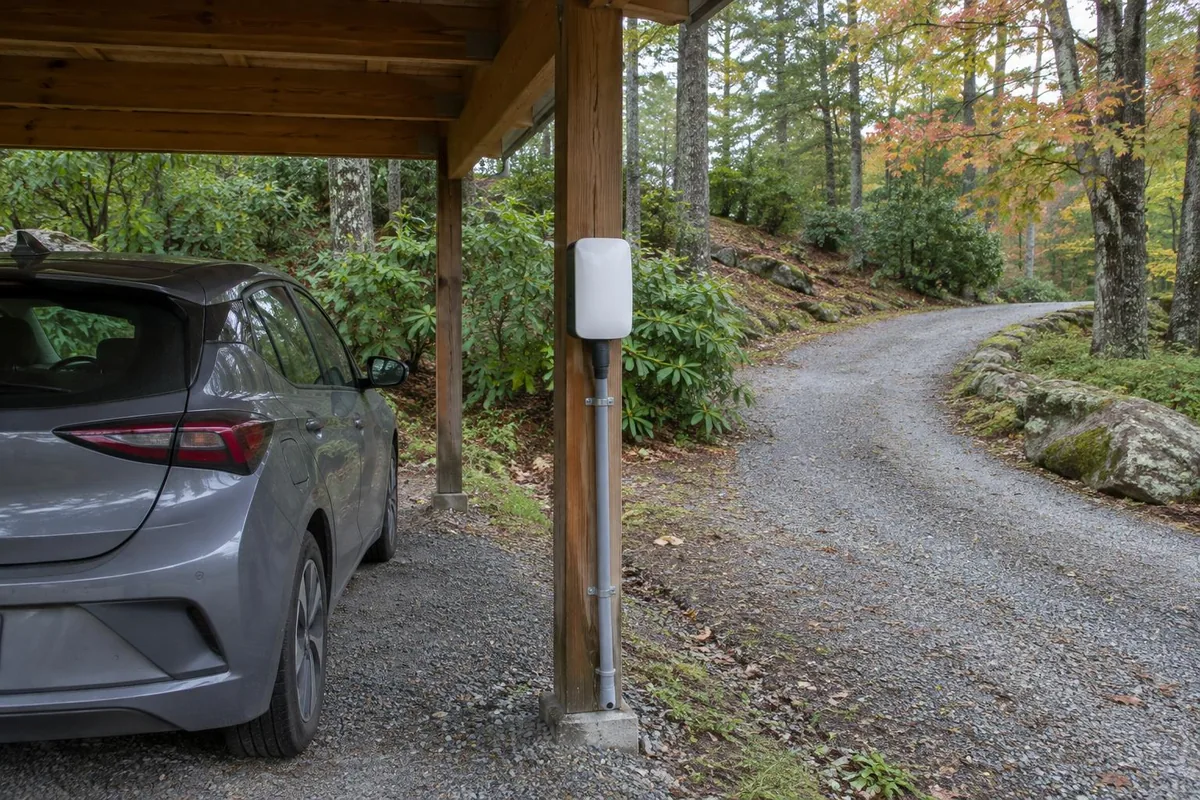
Duke only requires that the charger be fed from the home's own panel, so a garage is optional. Units go on attached garage walls, carport posts, siding or masonry outside, with weather-rated conduit covering the whole route from the panel.
Hillside lots and detached garages mean longer runs, and we price that distance before work begins. Conduit on a carport post has to survive rain, sun and cold, and masonry needs the right anchors. We choose the mount spot with you at the estimate, keeping the cable clear of the walk from car door to house door.
Most calls start with the panel, the plug or the paperwork. These are the situations Asheville owners describe to us most:
Which Panel and Permit Problems Do Owners Face?
A panel quote with no measuring. A newer house often has 200-amp service with room for a 60-amp circuit, and a load calculation shows it in an afternoon.
The breaker trips overnight. Code treats charging as a continuous load, so we confirm the breaker has the extra 25 percent margin and correct it if not.
The car shares the dryer outlet. Unplugging the dryer every night wears the receptacle down, and a charger above 40 amps cannot use one in any case.
The wall outlet is too slow. Ordinary household current replaces a few miles of range an hour, and a Level 2 circuit replaces many more.
A charger is already in the box. We check what the panel can give and what the car accepts, then size the circuit to the smaller number.
A co-op bill and no Duke credit. French Broad EMC and Haywood EMC members are not Duke customers, so we check the bill first.
No one knows the permit office. Inside the city it is Development Services, and in the county it is the Permits & Inspections office.
Commutes here are short, 18.0 minutes in Asheville and 20.8 across the county, so the reason to install Level 2 is convenience. You plug in when you park and leave with a full battery. Homeowners here also tell us they want to stop thinking about charging, and a circuit that works every night does that. Older houses with a full panel, detached garages and hillside runs are the cases where a written plan matters most, and we walk through each one at the estimate.
How an Asheville EV Charger Job Runs, From Call to Inspection
Four steps cover every Asheville charger job, so you always know what comes next. Most installs finish in one visit of four hours to a full day, and the inspection is booked for a separate day.
The Call and the Free Quote
Tell us what you drive, where it parks and what the panel looks like. A photo of the open panel door speeds things up. We book a visit, and the free estimate that follows lists labor, parts and the permit fee on their own lines.
The Panel Visit
We read the panel label, count open slots and add up the range, dryer and heat pump. That load calculation shows whether one new breaker will do. If not, the house may need a subpanel, a load management device or more service. We explain the choice before any work is booked.
The Install Day
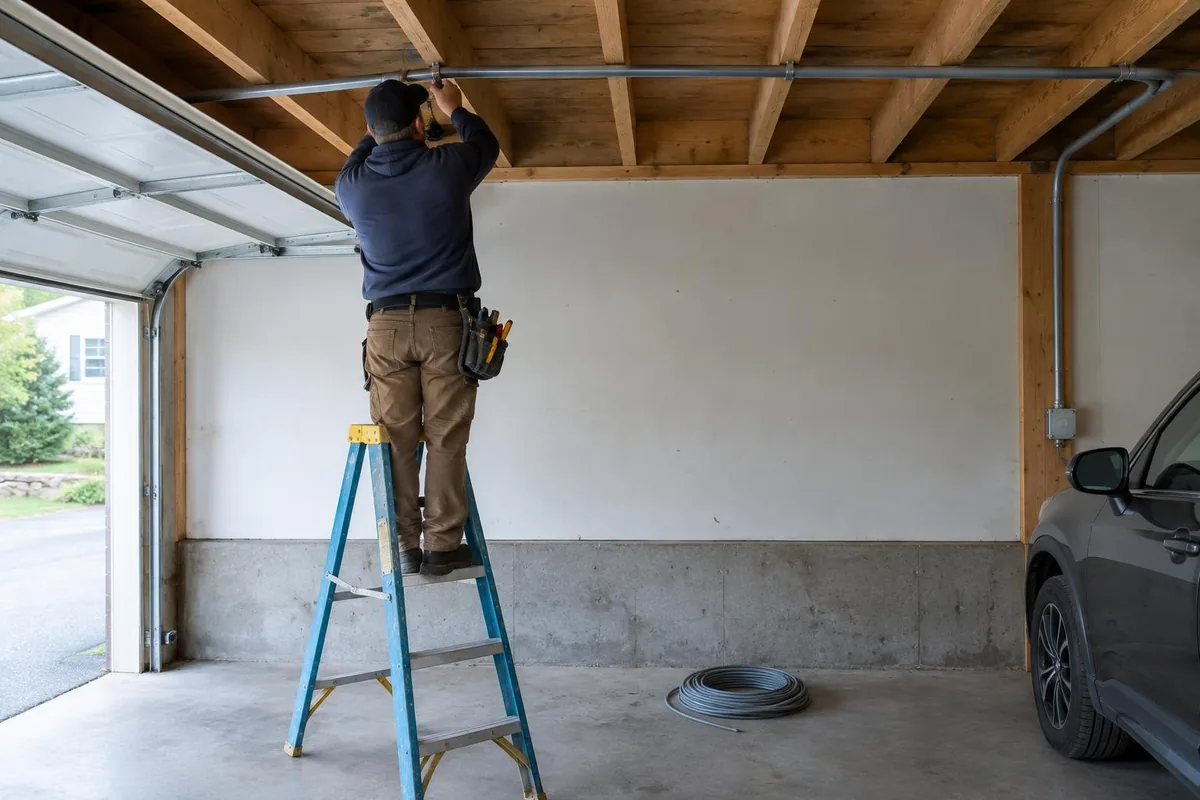
The crew runs conduit and wire from the panel to the parking spot, mounts the unit and tests it. Your power is cut only for the part of the visit that happens inside the panel. A long hillside run or a crawl space fills the day, and a short run beside the panel goes faster.
Inspection and Handover
The permit goes to the City of Asheville or the county office, and the inspector visits on a separate day. After sign-off we set up the charging schedule, show you the new breaker and hand over the itemized invoice.
Why Asheville Drivers Choose Our Crew
Four habits run through every Asheville job, no matter which car or charger you own:
Numbers Before a New Panel
A load calculation comes before any panel talk. When a panel cannot spare the amps, we price load management and a subpanel beside a full service upgrade, so you see the options side by side.
One Visit for Most Jobs
Most installs finish in one visit, between four hours and a full day. A long run, a crawl space or panel work fills the day. The inspection is booked for a later date, and we meet the inspector.
Paperwork Ready for the Duke Credit
Duke's credit sorts costs into covered and not covered, so every invoice we write keeps labor, materials and the permit fee on separate lines. The permit paperwork goes in your job folder at the end. Co-op members get a clear answer about eligibility before work starts, not after.
Done to Code, Start to Finish
Because charging is a continuous load, the breaker is sized at 125 percent of the charger's rating, which puts a 48-amp charger on a 60-amp breaker with matching wire. Every circuit is permitted and inspected before we call it finished.
What Our EV Charger Installation Guarantee Covers
Our guarantee is set out in your free estimate, so you read the terms before any work begins. Four things stand behind every Asheville job:
Itemized pricing puts labor, parts and the permit fee on separate lines of the estimate and the invoice.
Permitted work means every charger circuit is filed with the right office and inspected before we call the job finished.
Licensed electricians means every install is done by licensed North Carolina electricians.
Panel math first means a panel upgrade is quoted only after a load calculation shows the house needs one.
The full terms of the guarantee appear in your estimate.
EV Charger Installation FAQs From Asheville Homeowners
How much does EV charger installation cost in Asheville?
Most installs cost $800 to $2,000 for labor and materials, and the charger is bought separately. Panel work is quoted after a load calculation.
Does the Duke credit apply in Asheville?
Duke Energy Progress serves Asheville, and its Charger Prep Credit is open to Duke customers in North Carolina. Members of French Broad EMC or Haywood EMC are not Duke customers.
Do I need a permit for EV charger installation in Asheville?
Inside the City of Asheville, the permit comes from Development Services. In the unincorporated county, Biltmore Forest, Weaverville and Woodfin, it comes from the county's Permits & Inspections office.
Can my panel handle an EV charger?
Newer homes with 200-amp service usually can. A load calculation confirms it, and load management or a subpanel covers tighter cases.
Do I need a licensed electrician for EV charger installation?
A charger circuit is new electrical wiring, so it needs a permit and an inspection, and our crew works under a North Carolina electrical license.
Does my charger have to go in the garage?
The charger can mount on a carport post or an exterior wall, as long as it connects to the home's own panel.
How long does EV charger installation take?
Most installs finish in one visit of four hours to a full day, with the inspection scheduled separately.
Request Your Free Asheville EV Charger Estimate
The estimate is free and itemized, and it comes before any commitment on your side. We would rather lose a job than sell a panel upgrade a load calculation would have ruled out, and that habit is why owners send their neighbors our way. Tell us what you drive, where it parks and send a photo of your panel. If a second EV is coming, say so, and one plan can serve both. We schedule a free panel check around your day, then deliver a free estimate with every cost on its own line.